More Americans Now Turn to AI for Financial Guidance Than to Professional Advisors, NEFE Poll Finds
A new poll from the National Endowment for Financial Education found that 51 percent of U.S. adults who use AI tools do so to seek financial guidance, surpassing the share who turn to professional financial advisors. The survey, conducted between August and September 2026, also found that 21 percent of AI users discovered the financial information they received was inaccurate or misleading. Researchers say the findings highlight the need for stronger financial education to help people evaluate AI-generated advice.
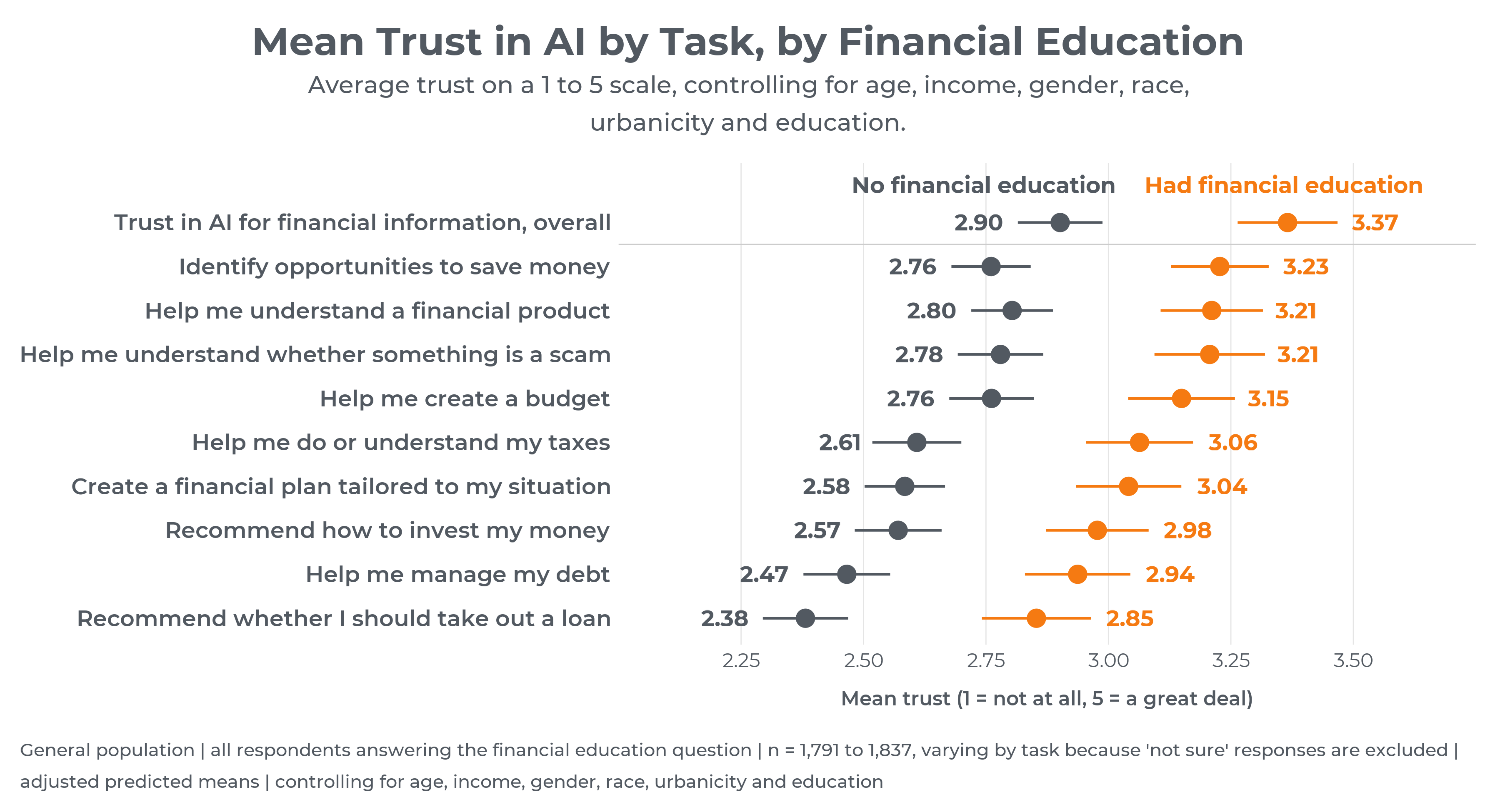
More Americans now turn to artificial intelligence for financial guidance than to professional financial advisors, according to a poll released by the National Endowment for Financial Education on November 17, 2026.
The survey, conducted between August and September 2026, found that 51 percent of U.S. adults who use AI tools do so to seek financial information. That figure exceeds the share who consult professional advisors for the same purpose.
The findings reflect how quickly AI tools have moved from novelty to mainstream resource for personal finance decisions. But the poll also raised concerns about accuracy and trust.
Twenty-one percent of AI users reported discovering that financial information they received from an AI tool was inaccurate or misleading. Despite this, 26 percent of users said they made a financial decision based solely on AI-provided information without independently verifying it.
Trust in AI as a financial source remains moderate. Only 35 percent of respondents said they trust AI "a great deal" or "quite a bit" for financial guidance.
The poll found that AI users for financial purposes tend to be younger, have higher incomes, and have higher levels of education. People who have received prior financial education are more likely to use AI for financial information, but that education does not necessarily make them more likely to verify what the AI tells them before acting on it.
NEFE president Billy Hensley said the findings point to a gap between how much people rely on AI and how well they are equipped to evaluate what it tells them. "Financial education needs to include how to critically assess AI-generated advice," he said.
The poll comes as AI tools have become embedded in everyday financial tasks, from budgeting apps to investment platforms that use AI to generate personalized recommendations.