Study Links Frequent Hypnic Jerks to Higher Anxiety and Worse Sleep Quality
Research published in PLOS Mental Health found that people who experience hypnic jerks at least once a week report significantly worse sleep quality, more insomnia symptoms, and higher levels of anxiety and depression. The study surveyed nearly 200 adults about the frequency of their sleep starts and their mental health status.
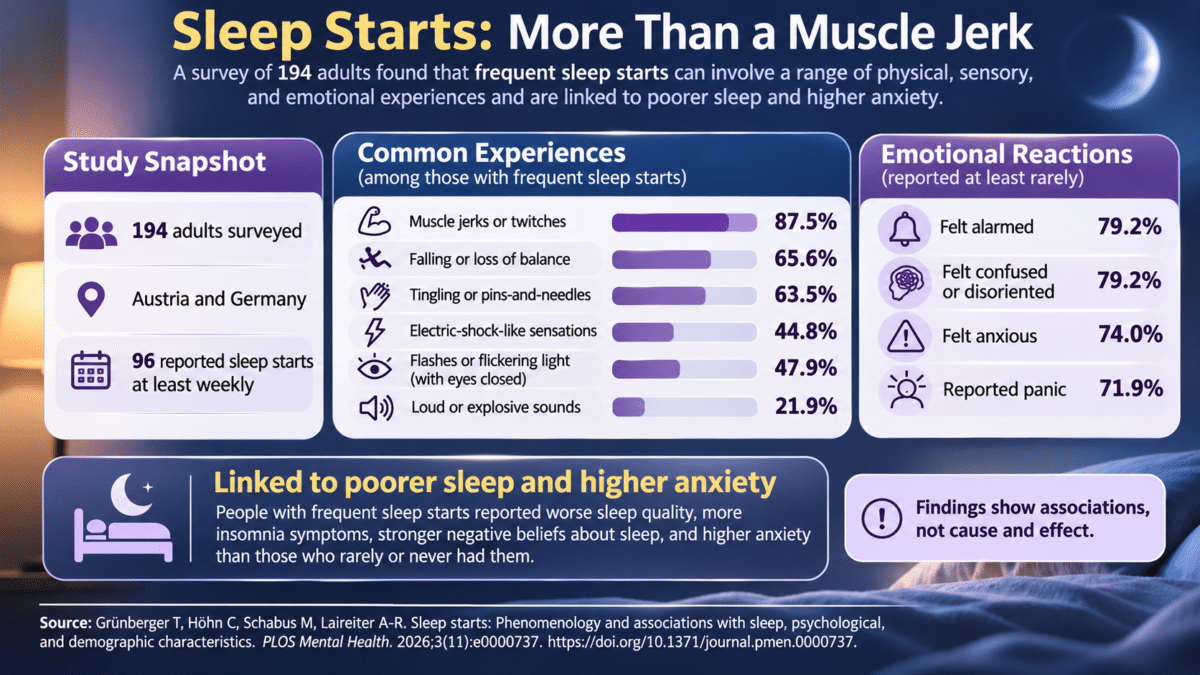
Research published in PLOS Mental Health found that people who experience hypnic jerks at least once a week report significantly worse sleep quality, more insomnia symptoms, and higher levels of anxiety and depression compared to those who experience the jolts less frequently.
Hypnic jerks, also called sleep starts, are the sudden muscle contractions that many people feel as they drift off to sleep, often accompanied by a sensation of falling. They are common and generally considered harmless, but the new study suggests that frequent episodes may signal underlying mental health concerns.
Investigators surveyed nearly 200 adults about the frequency of their hypnic jerks and their sleep and mental health status. Those who experienced the jolts at least once a week consistently scored worse on measures of sleep quality, insomnia, anxiety, and depression than those who experienced them less often.
The researchers noted that the relationship between hypnic jerks and anxiety may run in both directions. Anxiety can disrupt the transition from wakefulness to sleep, potentially triggering more frequent jolts, while disrupted sleep can in turn worsen anxiety and mood.
HealthDay reported on the study on November 12, 2026, and it was included in the American Medical Association's weekly news roundup for the week of November 9 to 13.
The findings add to a growing body of research connecting sleep quality to mental health outcomes. Experts say people who experience frequent hypnic jerks and also struggle with anxiety or poor sleep should discuss both issues with a healthcare provider, as treating one may help improve the other.
The study did not establish a causal relationship between hypnic jerks and anxiety, and the researchers called for larger studies to confirm the findings.